
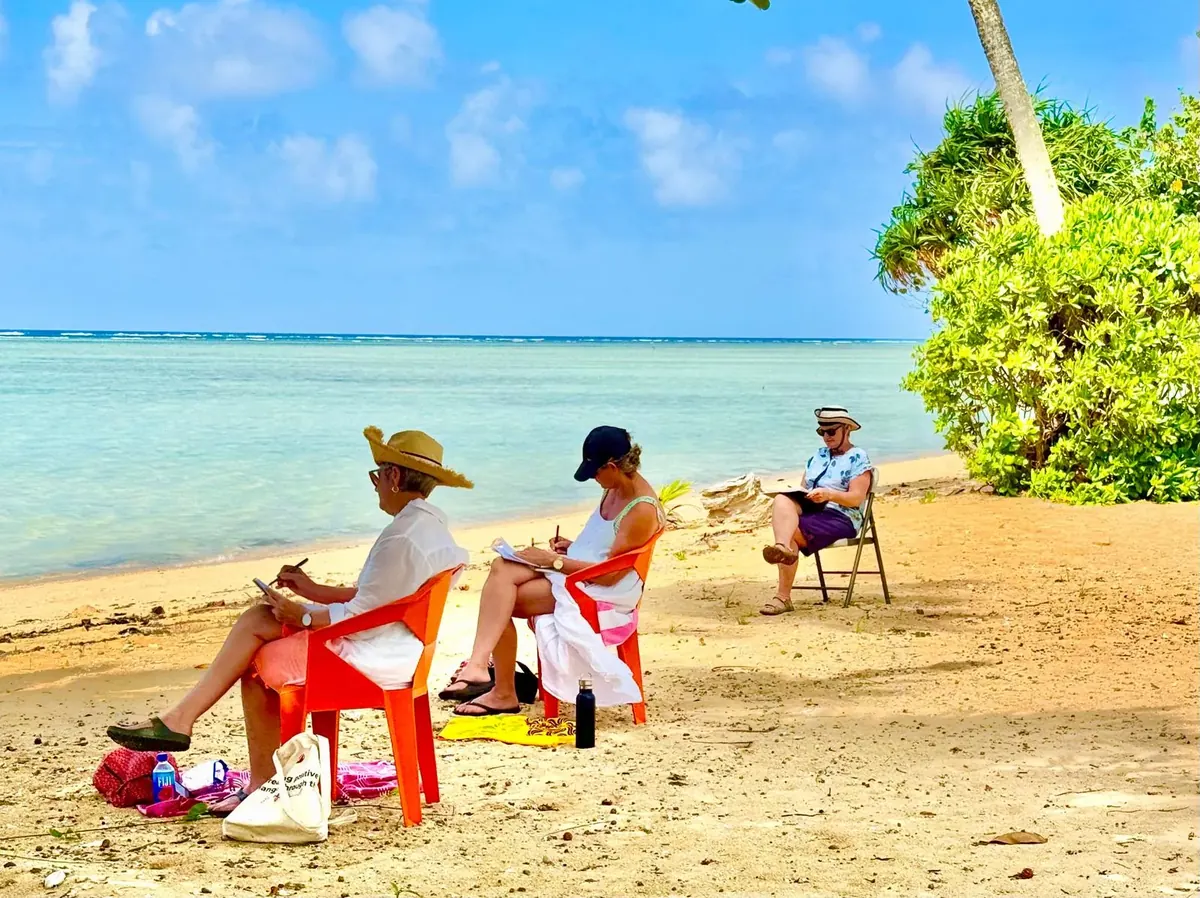
Sketching with Erin Hill is a whole different approach from using only watercolours, and I loved it.
Sketching aims to capture an impression, a moment, a whole scene or a tiny detail. And in the process, you can easily move a lamppost in a street, add in a boat on the sea, give a house front an entirely different colour.
Starting with a single hibiscus
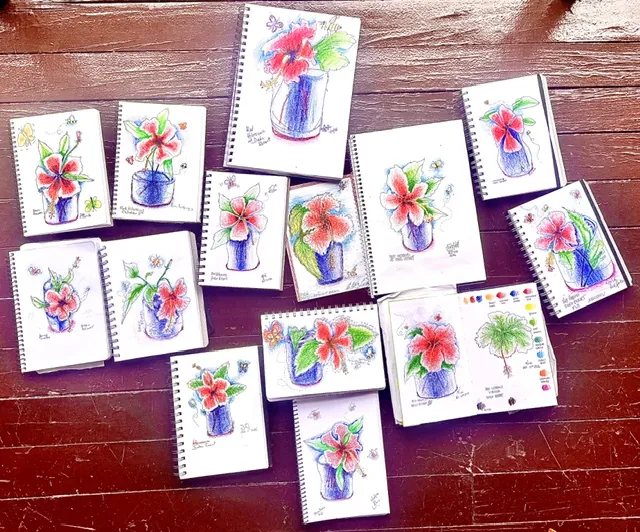
Erin starts us all off with a hibiscus flower in a glass of water: five delicate petals and a long stamen thrusting out from the centre. It’s an exercise in close observation, tracing the curves of the petals and how they overlap, watching the way the stamen needs so much space. And yet… we can add in a couple of leaves that aren’t actually there to enrich the background, and make the water a pretty blue rather than colourless.
What do we learn?
- We can all do this. There’s slight astonishment that we can all produce really quite creditable sketches. Everyone’s finished hibiscus actually looks like a hibiscus, even those students who have never done something like this.
- Look at what’s really there. We learn to look at what’s actually there and not what we expect to be there.
And armed with this new confidence, we march off to explore Savusavu and the Fijian landscape.
Sketching the Savusavu market
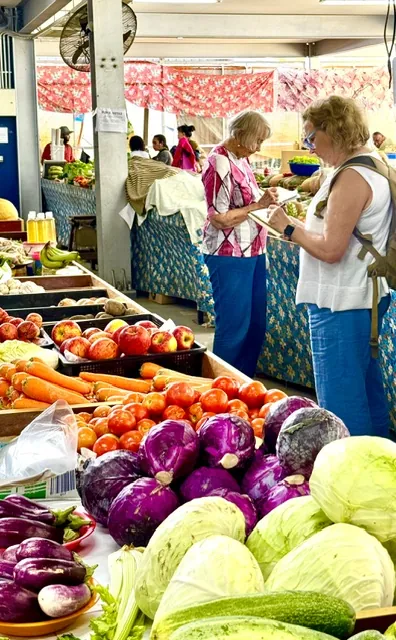
We spend an exhilarating morning in the market, sketching:
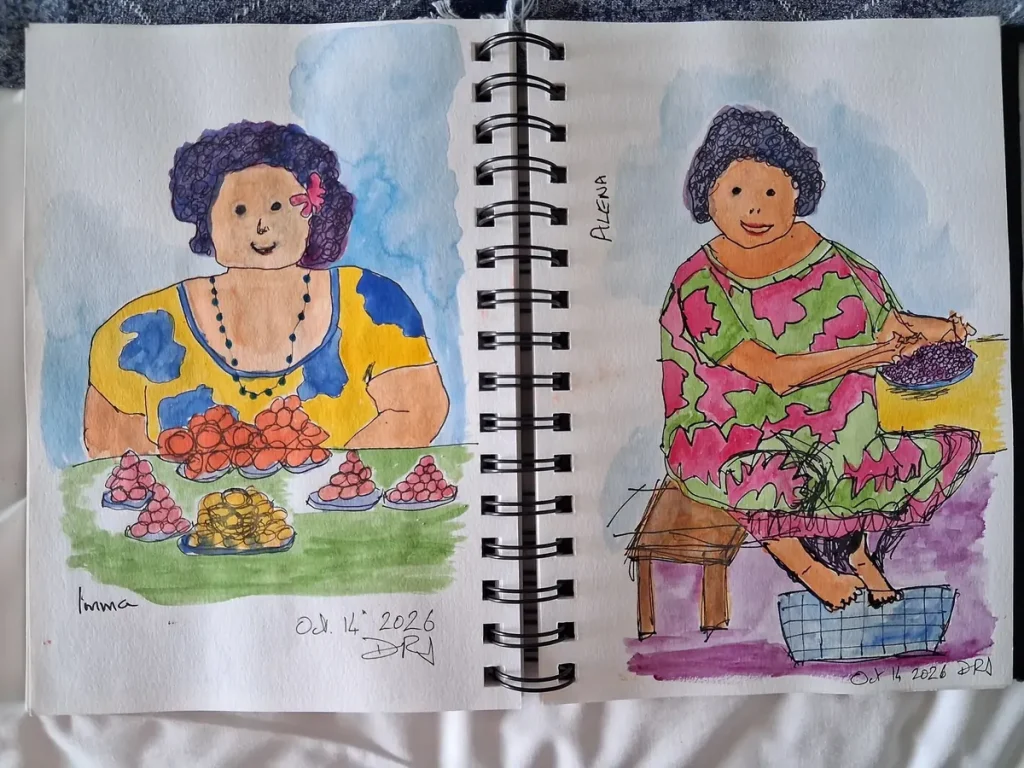
- The women selling piles of tomatoes, bundles of dalo, bowlfuls of lemons
- A man sprawled out on a chair absorbed in his cellphone
- A display of the yaqona roots that are used for making kava
- A jar of chilies
- A table packed with beans, buk choi, spinach, ota ferns and sweet potatoes
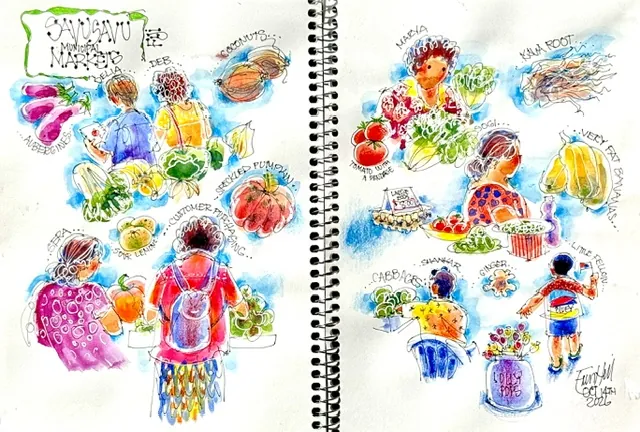
Some of my figures look like potato people but I’m still happy. I give them brightly coloured dresses in patterns that startle the eye, and each one (for me at least) evokes the fun of the moment.
Beaches, palms and the colours of the ocean
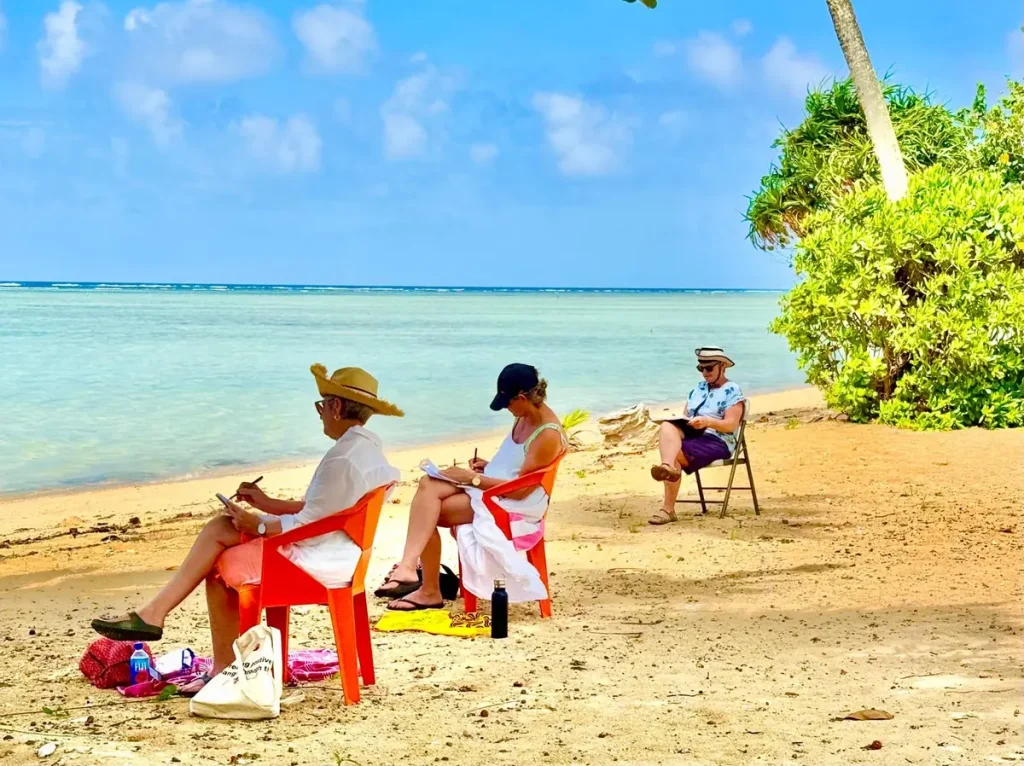
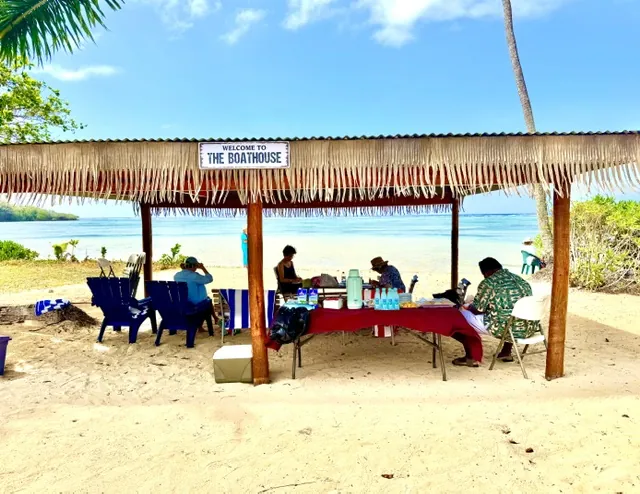
We visit a beach and sit under the palm trees, sketching the stretch of sand and the sweep of the ocean. Have you ever considered how many colours are in the ocean? If you’re a painter then of course you have, but for some of us it was a revelation. Not just the many blues you expect, but greens and yellows and pockets of mauve and touches of sheer white. And if it was a bit uninteresting, we’d add in a figure or a bird. If that was all too overwhelming, there were the smooth large vutu nuts to sketch, or shells from the water’s edge.
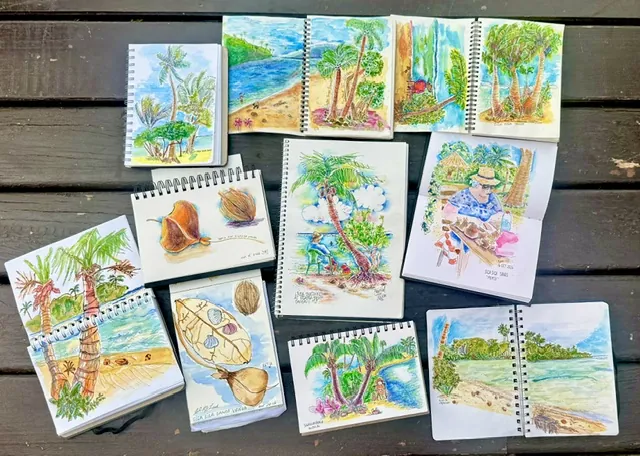
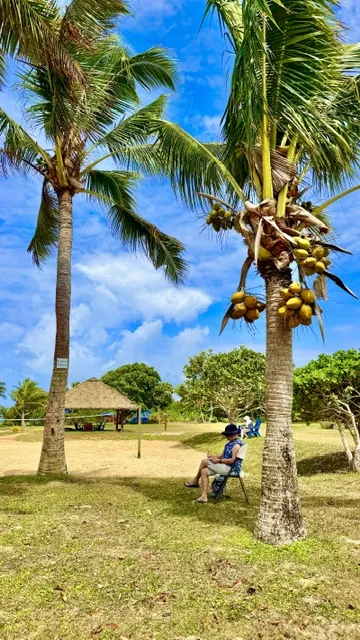
We sat in the art studio looking down at the gardens of Daku Resort and sketched palm trees, papaya trees, banana trees, rain trees… curved palm fronds, rustling banana leaves, clustered bunches of papayas.
Colour, used imaginatively
We used colours imaginatively, sometimes wildly. A shop front that was dull? Give it a bright pink fascia. A house that needed more interest? Give it a row of orange pot plants.
And by the end of the week everyone had a sketchbook full of all sorts: places, people, details of a shop, impressions of a person sitting at a cafe table.
The Erin Hill method, and sketching at Daku in 2027
Erin’s teaching follows a set pattern that gives people the tools to create sketches that are vibrant mementoes of a time away. She has formalised her techniques into the Erin Hill method, which many students over the years have learned and loved, and has passed on her approach to a number of tutors.
Two of them are coming to Daku in 2027:
- Alisa Cooper: August 7 – 14
- Tony McNeight: October 2 – 9
All our tutors follow the Erin Hill system but interpret the course in their own fun, colourful and joyful way. When you join a tour with another Erin Hill tutor, be assured you’ll be familiar with the way they guide you through foundations, and equally delighted with your results.
Come and join us
Have fun. Discover you can do stuff you never thought you could do, or get even better at stuff you already love.